If you walk around a busy machine shop, you can usually tell how healthy the business is just by listening. But there’s one sound that every shop manager dreads: the distinct, premature screech of a carbide drill or end mill giving up the ghost.
In metalworking, tooling is one of your highest on
going variables. When tools dull, chip, or break early, it kills your cycle times, tanks your surface finishes, and eats right into your profit margins.
While most shops look at feeds, speeds, and tool coatings to sol
ve premature wear, the real culprit is often sloshing around right under their noses. Dirty fluid is a tool killer. Implementing a dedicated machine tool coolant filtration strategypecifically via a centralized system—is one of the fastest ways to dramatically lower your tooling costs. Here is exactly how it works.
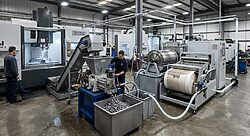
When your chip conveyor carries scrap out of the machine, those chips are still drenched in expensive fluid. Many modern shops route these wet chips directly into a briquette press. The press squeezes the loose chips into dense, high-value metal pucks, wringing out the residual coolant in the process.
Because this reclaimed fluid is packed with micro-fines, it cannot go straight back into the machine. It needs to be routed directly into your centralized CNC coolant filtration system. By pairing your chip extraction, briquetting, and fluid filtration into a single, cohesive ecosystem, you completely close the loop on your shop’s waste.
When shop owners realize they are bleeding money on tooling, the next question is always: How do we actually fix the fluid?
There is no one-size-fits-all setup. The right choice depends entirely on your production volume, the materials you cut (ferrous vs. non-ferrous), and how your shop floor is physically laid out.
Different materials create different types of waste. For example:
A centralized system changes the game by pulling fluid away from individual machines, running it through a highly efficient cleaning process, and returning pristine, chip-free coolant back to the line.
By keeping fluid perfectly clean across your entire floor, you achieve three massive wins for your tooling budget:
When your tools are lubricated with clean fluid rather than an abrasive slurry, friction drops. Machinists frequently report a 20% to 50% increase in tool life simply by switching from standalone, poorly filtered sumps to a centralized system. That means fewer tool changes, less downtime, and a massive drop in your monthly tooling spend.
When micro-fines get trapped between the tool and the workpiece, they leave micro-scratches. If you are working to tight tolerances or aerospace-grade finishes, a single scratch can scrap an expensive part. Clean coolant ensures smooth, repeatable finishes, saving both your tools and your raw materials.
Modern high-speed machining relies heavily on through-spindle coolant (TSC) to evacuate chips from deep pockets and holes. If your coolant contains even tiny particles, it can clog these tiny ports. A centralized system ensures the fluid feeding your high-pressure lines is pristine, protecting your expensive high-pressure pumps and preventing catastrophic tool blowouts mid-cycle.
On average, metalworking shops see a 20% to 50% increase in tool life after implementing a dedicated filtration system. By removing abrasive micro-fines from the fluid, you significantly reduce friction and micro-chipping at the cutting edge, meaning your carbide inserts, drills, and taps last much longer before needing a swap.
Absolutely. Modern CNC machining relies heavily on high-pressure through-spindle coolant (TSC) to clear chips out of deep cavities. If your coolant is filled with tiny metal fines, they can easily clog those microscopic coolant holes in your drill. When the fluid cuts off mid-cycle, the thermal shock and friction will instantly snap or melt the tool inside the part.
They are all part of the same shared workflow. Your chip conveyor removes the heavy bulk waste from the machine. If you route those wet chips into a briquette press, it squeezes out the residual fluid while compacting the metal scrap. That reclaimed fluid is highly concentrated with fine debris, so it must be routed directly into your filtration system before it can safely go back to work.
These are the three primary types of media used to clarify fluid:
It depends entirely on your material removal rate and the type of system you run. Automatic paper bed filters use integrated sensors to detect when the media is blinded by dirt, automatically advancing a fresh roll of paper only when needed. This keeps manual operator intervention to an absolute minimum compared to standalone sumps.
It plays a massive role. Anaerobic bacteria thrive in stagnant, dirty environments—especially underneath a layer of leaked tramp oil. Centralized filtration keeps the coolant continuously moving, aerated, and clean. Removing the food source (metal fines) and separating the tramp oil drastically slows down bacterial growth, keeping your shop smelling fresh and protecting your operators’ skin.
For smaller shops, a centralized loop might be overkill, and dedicated, high-efficiency standalone units are often more practical. However, if those 5 machines are running high-volume, high-precision parts 24/7, a small centralized loop can still pay for itself incredibly fast through shared maintenance and automated fluid management.
Lowering your tooling costs is just the tip of the iceberg. Centralized filtration systems also dramatically extend the life of the coolant itself, saving you thousands in chemical costs and disposal fees. Plus, your operators spend their time making parts instead of shoveling sludge out of individual machine sumps every few weeks.
If you’re tired of watching your tooling budget vanish into a sea of dirty fluid, it’s time to rethink your floor’s workflow.
Explore our complete line of industrial CNC coolant filtration systems to find the perfect fit for your shop floor, or get in touch with our engineering team to design a custom setup that keeps your machines running clean.


 (800) 968-7722
 (800) 493-3462