Fluid Contamination Management for Cost Savings, Safety and Compliance
Metalworking operations want to accomplish one thing (aside from hitting production goals, of course): reduce costs. As operations try to maintain profit margins while keeping production levels high, improving operational efficiency and quality become paramount.
In today’s volatile production landscape, lowering expenses can help the bottom line just as much as optimizing and improving your process—and they often go hand-in-hand. This is especially true for coolant management, and one lesser-trodden path to cost savings is how your operation manages contamination in your fluid systems.
Cutting Tool Engineering reports that active fluid management can cut new coolant purchases by 75% while reducing disposal costs by up to 90%. That is far from nothing to sneeze at—those are significant bottom-line boosters.
Unresolved contamination in the fluid system poses several risks to personnel, the shop environment and the overall process. But the good news is that it can often be mitigated right at the source, before impurities, metals and oil buildup set in.
Risks of Poor Contaminant Management
Mismanaging or ignoring contaminated fluids can lead to issues that aren’t immediately obvious but are avoidable and costly.
When coolant gets dirty and starts to degrade, it loses its ability to do its two jobs: cooling and lubricating at the contact point. Once tramp oil, bacteria and metal fines set in, both functions lose their effectiveness. This expedites tool wear, reduces quality and increases disposal fees and fluid top-offs. Coolant, then, becomes one of the biggest hidden cost drivers in metalworking.

The clearest sign of contaminated coolant is tool wear—but that’s only one part of potentially recurring operational expenses.
Tramp oil impedes heat dissipation, while accumulated metal fines add an abrasive compound to the process. As tramp oil builds in the sump, it prevents the proper oxygen-to-fluid mixture, creating perfect conditions for anaerobic bacteria to grow. This is when the famous “Monday morning smell” hits the shop floor, usually prompting a sump cleanout. By then, the threat of compounding problems increases.
These accumulating bacteria produce acids that lower pH, which encourage corrosion of ferrous metals, often at the cutting juncture. But the threat here is that it can extend to your pumps, spindles, coolant lines, sumps and electronics because they are exposed. This creates a new challenge for maintenance teams because corrosion and accelerated wear in these components don’t always point to an obvious culprit, and you end up chasing the problem while significant issues can occur, including:
If left untreated, the process can quickly fall into a cycle that affects the entire production floor, poses health risks to your staff, creates compliance issues and can be expensive to correct.
These problems often trace back to old, degraded coolant.
Contaminated Fluids Also Include Metal
Beyond the dangers of contaminated coolant, abrasive metal fines in the fluid system can create another problem.
Even in filtered systems, fine particles can slip through filters and damage the machine cabinet window glazing, significantly increasing wear on high-pressure pumps and components. This highlights the crucial nature of effective filtration at the start of the process.
Benefits of Properly Managing Contaminants
Contaminated coolant can cause cascading problems at the facility, but the opposite is also true when you properly manage contaminants in your fluid system.
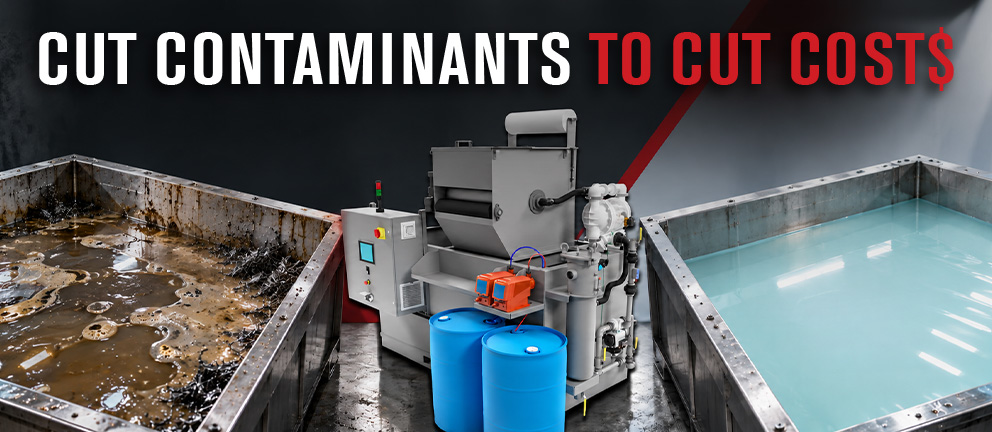
Removing all contaminants from the sump, chip beds, lines and tramp oil film isn’t possible, but using centralized coolant recycling can continuously minimize contaminant concentration before it becomes troublesome downstream and leads to bigger issues.
Operations can utilize fluid separation and filtration systems to stabilize and clean coolant—and make it reusable. This significantly reduces new fluid costs and maintenance, extends the performance life of clean coolant, and improves bottom-line revenue.
Using a consistently clean cutting fluid can extend tool life by up to 25%, leading to significant annual cost savings for perishable tools, improved finishes, reduced compliance risks and a safer work environment.
Successful Fluid Management at a Glance
PRAB® systems are proven to mitigate fluid contamination challenges.
| Improvement Area | Result(s) | Real-world Example |
| Coolant Life Extension | 2–5x increase | Fluid Filtration Overview |
| New Coolant Purchases | 50–75% reduction | Guardian System |
| Coolant Disposal Costs | Up to 90% reduction | Iowa Case Study |
| Tool Life | Up to 25% improvement | PRAB Blog |
| Payback Period | 6–9 months | Cameron Case Study |
Contamination Control Starts with Clean Coolant
Minimizing coolant degradation goes a long way toward effective contamination management, significantly reducing new fluid purchases and maintenance costs while delivering health benefits to your team and improving workplace safety.
Visit prab.com to talk with our expert team about the right fluid systems for your operation that can help you reduce costs, maintain compliance and optimize your process.