Published October 1, 2026. Last updated October 1, 2026.
How do coolant recycling systems work?
A coolant recycling system takes used water-based coolant from your machine sumps, removes tramp oil and suspended solids, controls bacteria, and returns the fluid to the proper concentration for reuse in the machines, rather than sending it to a waste hauler. Systems that handle all four jobs extend coolant life the most. Filtration-only units clean the fluid but leave bacteria and concentration drift for someone else to manage. PRAB customers using the centralized Guardian Coolant Recycling System have documented reductions in new coolant purchases by up to 75% and in coolant waste by up to 90%.
In many machine shops, coolant gets dumped because it’s dirty, not because it’s worn out. The concentrate is often still usable when the sump starts to smell, the tramp oil layer thickens, and fines start showing up as scratches on part finishes. Industrial coolant recycling is built on that gap. Take out the contamination, and you keep using the fluid you already paid for.
This guide covers what coolant recycling equipment removes, how filtration, recovery, and purification systems differ, how central and mobile machines compare, and what the savings depend on. It’s written for plant managers, maintenance leads, and EHS managers comparing coolant management solutions for metalworking operations.
An industrial coolant recycling system is equipment that cleans and reconditions used metalworking fluid so it can be returned to production. It works on water-based coolants and washwater: the fluids in the sumps of CNC machining centers, lathes, grinders, and parts washers.
You’ll also see the terms coolant recovery systems and coolant purification systems. Recovery usually emphasizes reclaiming fluid that would otherwise be hauled away. Purification usually refers to bacterial control. A complete recycling system does both, as well as filtration and concentration control.
Used coolant breaks down in four ways. Good coolant fluid recycling equipment addresses each one.
| Problem | Where it comes from | What it costs you | How recycling handles it |
|---|---|---|---|
| Tramp oil | Hydraulic oil, way lube, and spindle oil leaking into the sump | Feeds bacteria, adds smoke and mist, leaves residue on parts | Coalescing separation. The Guardian removes free-floating and mechanically dispersed tramp oil to 0.1% or less. |
| Suspended solids (fines) | Chips and grinding swarf too small for the chip conveyor to catch | Scratched finishes, faster tool and pump wear, clogged nozzles | Filtration down to the level your process needs |
| Bacteria, etc. | Growth on tramp oil and in stagnant sumps | Odor, coolant breakdown, and worker skin and respiratory exposure | Biological control. PRAB’s ozone-based Coolant Manager is proven to kill up to 99.9% of coolant bacteria. |
| Concentration drift | Water evaporates; fluid drags out on parts and chips | Too lean: rust and shorter tool life. Too rich: wasted concentrate and residue. | Automatic make-up with properly proportioned coolant mix |
The four problems feed each other, which is why partial fixes disappoint. Filter out the fines but leave the tramp oil, and bacteria keep growing. Kill the bacteria but let concentration drift lean, and corrosion and tool wear show up anyway. PRAB’s engineering position is that successful recycling requires particulate removal, tramp oil removal, bacteria control, and concentration control to work together.
The health side matters too. NIOSH’s criteria document on metalworking fluids links occupational exposure to these fluids to respiratory and skin conditions, and contaminated coolant can exacerbate these conditions. Cleaner coolant is a safety improvement, not just a cost one.
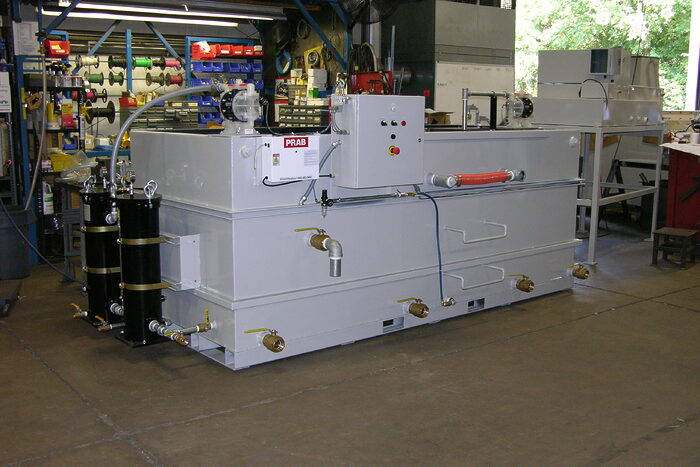
The labels on coolant recycling and fluid filtration equipment overlap more than they should. Here’s how the categories usually break down.
| Equipment type | What it does | What it usually leaves undone |
|---|---|---|
| Coolant filtration machines | Remove suspended solids, sometimes tramp oil | Bacteria control and concentration management |
| Coolant purification systems | Kill or suppress bacteria | Solids and tramp oil removal |
| Coolant recovery systems | Reclaim fluid that would otherwise be hauled away | Scope varies by vendor, so ask exactly what’s included |
| Full coolant recycling systems | Handle solids, tramp oil, bacteria, and concentration | Nothing in the fluid itself, but they take more floor space and investment than single-function units |
When you compare coolant filtration recycling equipment from different vendors, ask for a plain list of what the system does to the fluid. The product name won’t tell you.
Machine coolant recycling equipment comes in two basic forms. A central system serves many machines from one location. A mobile unit rolls from sump to sump.
The Guardian Coolant Recycling System is PRAB’s centralized coolant recycling system. Used coolant comes from the machines to the Guardian, gets cleaned and brought back to the right concentration, then goes back into production. Every configuration includes dirty and clean coolant tanks, an automatic air sparging system that keeps the coalescing media clean, and a coolant make-up system. Higher configurations add the ozone Coolant Manager and a dirty coolant transfer system. Modern Machine Shop has reported process rates of 90 to 1,500 gallons per hour, and larger systems are available.
PRAB’s MCR30 and MCR50 Mobile Coolant Recyclers clean coolant in place, one machine sump at a time. They remove tramp oil and solids. They don’t control bacteria or adjust concentration, so shops using them still need regular concentration checks. They’re a good fit for shops with a handful of machines, for sumps that sit far from the rest of the floor, or as a first step before a central system.
| Guardian (central) | MCR30 / MCR50 (mobile) | |
|---|---|---|
| Best fit | Many machines are running the same coolant | A few machines, or sump-by-sump cleanup |
| Tramp oil removal | Yes | Yes |
| Solids removal | Yes | Yes |
| Bacteria control | Yes, with the Coolant Manager | No |
| Concentration control | Yes, automatic make-up | No |
| Operator involvement | Minimal once installed | Operator moves the unit between machines |
One question to settle early: do your machines run the same coolant? A central system works best when they do. If you run several different fluids, talk with a PRAB specialist; they have many options and solutions.
It depends on numbers most plants already have: how much concentrate you buy each year, how much used coolant you pay to haul away, how often you dump and recharge sumps, and how much machine downtime those recharges cost.
PRAB’s published Guardian results show that new coolant purchases were reduced by up to 75% and waste fluids by up to 90%, with a typical payback of 6 to 9 months. A few documented examples:
Treat “up to” figures as the top of the range. A shop that already maintains its sumps carefully will save less than one that dumps coolant on a schedule. The fastest way to get a number for your own plant is the Guardian Coolant Recycling ROI Calculator, which uses the same performance data as PRAB’s published case studies.
The equipment is only part of it. Before you buy, look for these pieces:
No. Search for coolant recycling equipment, and you’ll find engine coolant recycling equipment, often sold with radiator cap adaptors, mixed in with metalworking systems. They’re different machines for different fluids.
Engine coolant recycling equipment is built for automotive and fleet service shops. It removes glycol-based antifreeze from a vehicle’s cooling system via radiator cap adaptors, cleans it, and restores its additives. Machine coolant recycling equipment, including PRAB’s, handles the water-based metalworking fluids used in machining, grinding, and parts washing. If you service vehicles, you need the automotive kind. If you run CNC machines, you need the metalworking kind.
Answer these before you talk to vendors. They’ll shorten the conversation and make quotes easier to compare.
No. The PRAB Guardian is designed for coolants. PRAB has an entire product line dedicated to Process water and industrial water recycling and reuse. and wash water used in metalworking operations.
No. It sharply reduces the volume of fluid you haul away, but the tramp oil and sludge the system removes still need proper disposal.
Only partly. Filtration removes solids, and some units remove tramp oil. Full recycling also controls bacterial load and concentration, helping keep the coolant in service longer.
The Guardian has been reported to process at rates of 1,500 gallons per hour, or much larger systems for higher throughput. Sizing depends on the total sump volume, the number of machines, and the contamination levels.
About the Author
Paul Montgomery is the Marketing Leader at PRAB, Inc., where he leads digital strategy, content, demand generation, and brand across PRAB’s four product lines. He has more than 20 years of B2B marketing leadership experience, including CMO and VP roles, and has built and led cross-functional teams across industrial manufacturing, SaaS, InsurTech, and technology. He also directs PRAB’s search and AI Search (AEO) programs.


 (800) 968-7722
 (800) 493-3462